The best dining room interior design ideas Sri Lanka homeowners are using right now blend local materials, climate-smart choices, and styles that feel genuinely at home here, not imported wholesale from a European magazine. Whether your dining room is a formal separate space or a corner of an open-plan living area, getting the design right pays off every single day.
Why Dining Room Design Matters More Than You Think
Sri Lankan family life revolves around the table. Sunday rice, festive spreads for Avurudu, impromptu dinners with neighbours dropping by: the dining room earns its keep in ways that a guest bedroom never does. Yet it’s often the last room to get design attention.
Open-plan living is increasingly common in Colombo condos and newer suburban builds in Galle and Kandy. That means your dining area is visible from the kitchen and the living room simultaneously. A cluttered or mismatched dining setup drags down the feel of the entire floor. Get it right and the whole space lifts. A good understanding of the art of interior design in Sri Lanka helps frame just how much thought goes into these connected spaces.
5 Dining Room Styles That Work in Sri Lanka
Not every global trend translates well to a tropical home. These five do.
Tropical Modern
Clean lines paired with natural textures: think a jak wood dining table, linen cushions on solid teak chairs, and a statement pendant in woven cane. Large louvred windows keep air moving. This style ages beautifully in Sri Lanka’s heat and humidity.
Colonial Revival
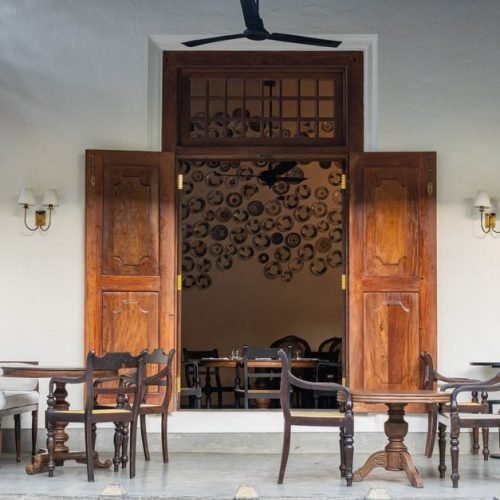
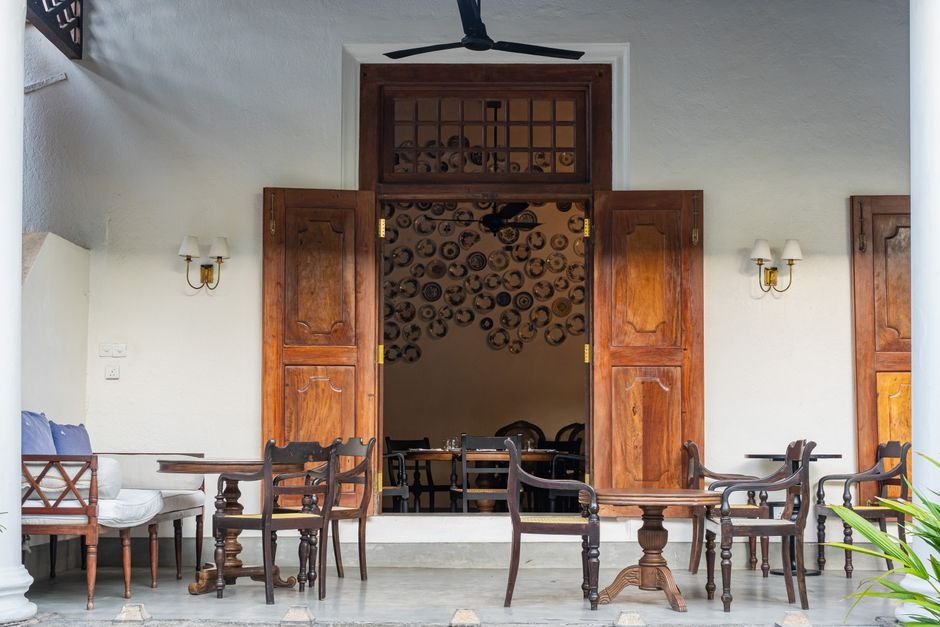
Calamander wood accents, dark polished floors, and high ceilings feel right at home in older Colombo 7 or Kandy properties. Reproduction colonial furniture makers in Moratuwa can produce stunning pieces at a fraction of antique prices. Keep walls light to avoid heaviness.
Minimalist Japandi
The Japandi blend of Japanese minimalism and Scandinavian calm works surprisingly well locally when you swap pine for local rubber wood and wool textiles for cotton or jute. A low-profile table, cushioned bench seating, and very little on the walls creates calm in a busy household.
Rustic Village-Inspired
Exposed brick, reclaimed wood benches, clay pots as centrepieces, and handloom table runners. This style is deeply personal and deeply Sri Lankan. Sourcing from Galle Fort artisan shops or Kandy craft markets keeps costs low and quality high.
Contemporary Urban
For city apartments, a compact glass-topped table with powder-coated metal legs, upholstered chairs in a bold colour, and a single dramatic pendant works well. This style suits smaller footprints and benefits from good artificial lighting.
Choosing the Right Dining Table and Chairs for a Sri Lankan Home
Most urban Sri Lankan dining rooms sit between 10 ft x 10 ft and 12 ft x 14 ft. For a family of four, a 4-seater table around 120 cm x 75 cm is comfortable without crowding. Going up to a 6-seater? Allow at least 90 cm of clearance on all sides for chairs to pull out properly.
Timber is king here. Jak wood (del gaha) is locally abundant, affordable, and holds up well. A solid jak wood table from a Moratuwa workshop runs roughly LKR 45,000 to LKR 90,000 depending on finish and size. Teak is more expensive but exceptionally durable. Calamander is a prestige choice: expect to pay LKR 150,000 and above for a full table.
Metal-frame furniture with wooden or upholstered seats is practical for humid climates as long as the metal is powder-coated or stainless. Bare iron rusts fast in coastal areas like Negombo or Galle. Cane and rattan chairs are comfortable and breathable year-round, though they need re-weaving every few years in high-use rooms.
Avoid solid MDF or particleboard in rooms without air conditioning. Humidity causes swelling and delamination within a couple of monsoon seasons. Solid wood or metal frames with solid wood tops are the safe long-term choice.
Lighting Ideas That Elevate Any Dining Space
A pendant light centred over the table is the single highest-impact change you can make to a dining room. It defines the zone, adds warmth, and draws the eye. Local lighting suppliers in Colombo’s Pettah and Maradana carry a wide range, from rattan pendants around LKR 8,000 to handblown glass imports in the LKR 30,000 to 60,000 range.
Natural light is free and plentiful. If your dining room has a west-facing window, sheer cotton curtains diffuse afternoon glare beautifully while keeping the room bright. East-facing rooms get gorgeous morning light, ideal for breakfast nooks. Mirrored surfaces or light-coloured walls amplify whatever natural light you have.
Warm white bulbs (around 2700K to 3000K colour temperature) make food look appetising and skin tones warm. Avoid cool white or daylight bulbs in dining spaces: they flatten colour and feel clinical at the dinner table.
Colour Palettes and Wall Treatments That Suit the Tropical Climate
Sri Lanka’s light is intense and warm. Colours behave differently here than in photographs taken in overcast European daylight. Whites look crisper, earthy terracottas feel richer, and deep teals hold their depth without looking muddy.
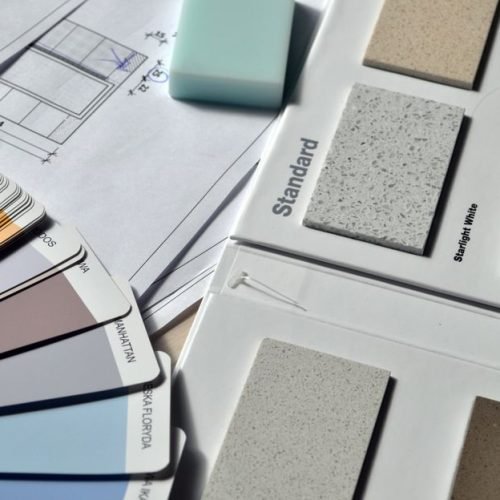
Earthy palettes, warm whites, terracotta, and muted ochre, work beautifully and cool spaces down visually. Lime wash finishes are experiencing a well-deserved revival: they breathe with the wall, resist mould better than standard emulsion, and look effortlessly artisanal. A limewash feature wall behind a buffet or sideboard costs roughly LKR 3,500 to LKR 6,000 per square metre for materials and labour.
Local paint brands like Nippon Paint Lanka and Dulux Sri Lanka both carry extensive ranges with humidity-resistant formulations. Ask specifically for their kitchen and bathroom variants in dining rooms without air conditioning: the mould-inhibiting additives are worth the small premium.
Bold accent walls in deep green or navy blue are popular in dining rooms right now, especially against jak wood furniture. Keep the other three walls neutral and let the accent do the work.
Flooring and Rug Options for Sri Lankan Dining Rooms
Terrazzo is having a major moment in Sri Lankan interiors and for good reason. It’s locally produced, extremely durable, easy to clean after messy meals, and looks genuinely beautiful. A locally poured terrazzo floor costs around LKR 2,500 to LKR 4,500 per square foot installed. Cement tiles are a more affordable alternative with similar visual appeal.
Local timber flooring in jak or rubber wood adds warmth but needs proper sealing every few years to resist moisture. In coastal homes, this maintenance schedule is non-negotiable.
Rugs under a dining table are tricky: food drops and chair legs catch on pile. If you want the layered look, choose a flat-weave cotton or jute rug and go at least 60 cm beyond the table edge on all sides so chairs stay on the rug when pulled out. Handloom cotton rugs from Dumbara or Kandy weavers are durable, washable, and locally made.
Smart Storage and Space-Saving Tips for Smaller Dining Areas
A built-in buffet or sideboard along one wall solves the storage problem elegantly. Have a local carpenter build one to the full width of the wall: upper cabinets with glass fronts for display, lower cabinets for linens, serving ware, and the things you reach for every week. This costs roughly LKR 60,000 to LKR 120,000 in Colombo depending on timber and finish.
Wall-mounted shelving above a console table is a lighter-touch alternative for renters or those who want flexibility. A fold-down wall table works brilliantly in apartments where the dining area doubles as a work-from-home space during the day.
Round tables are genuinely better for small rooms. They allow more people to squeeze in for a gathering and remove the problem of sharp corners in tight spaces. A 90 cm round table seats four comfortably and takes up noticeably less visual space than a rectangular equivalent.
Eco-Friendly and Sustainable Dining Room Choices in Sri Lanka
Sri Lanka has strong local options for sustainable material choices for your dining room. Reclaimed wood from demolished colonial-era buildings is available through specialist dealers in Colombo and Gampaha. It carries character that new timber simply cannot replicate and reduces demand for fresh-cut forest wood.
Rattan and bamboo furniture is lightweight, biodegradable, and grows fast. Both materials handle humidity well when properly finished. Natural jute and cotton textiles for cushions, runners, and curtains are easy to source locally and wash at home.
Choosing local artisans over imported furniture also cuts the carbon footprint significantly. A Moratuwa-made jak wood table has a fraction of the embedded transport emissions of a flat-pack import, and it’s built to last decades rather than years.
How Much Does a Dining Room Redesign Cost in Sri Lanka?
Costs vary enormously by scope. For a rough guide, looking at interior design costs in Sri Lanka gives a full breakdown, but here are the broad tiers for dining rooms specifically.
- DIY refresh (LKR 25,000 to LKR 75,000): New paint, a pendant light, cushion covers, and a rug. Same furniture, transformed feel.
- Partial redesign (LKR 150,000 to LKR 400,000): New dining table and chairs, lighting upgrade, built-in shelving or buffet, and some wall treatment. This is where most homeowners land.
- Full professional fit-out (LKR 500,000 and above): Custom cabinetry, new flooring, full lighting scheme, custom furniture, and professional design fees. For a dining room done properly with premium local materials, LKR 700,000 to LKR 1.2 million is realistic in Colombo.
If budget is the main constraint, there are genuinely effective budget-friendly interior design tips that stretch every rupee without compromising on style.
When to Call a Professional Interior Designer
Some projects are genuinely DIY-friendly. Others quietly spiral. If you’re planning to move walls, change flooring throughout, or fit custom cabinetry across an open-plan space, a professional saves you money in the long run by preventing costly mistakes and supplier miscommunications.
A dining room interior design consultant in Sri Lanka typically charges a consultation fee of LKR 15,000 to LKR 40,000 for an initial visit with mood board and material recommendations. For full project management, fees are usually a percentage of the project cost, between 10% and 15%.
The clearest sign you need professional help: you’ve visited three furniture shops and still feel uncertain. That uncertainty is expensive. A good designer resolves it in one meeting. Good dining room interior design ideas Sri Lanka professionals are not a luxury; they’re a practical tool for getting a complex project right the first time.
FAQ
What dining room style suits a small Sri Lankan apartment?
Minimalist or contemporary urban styles work best. Choose a round table (90 cm diameter seats four), light wall colours, a single pendant overhead, and wall-mounted storage rather than freestanding furniture. Keeping the floor mostly clear makes the room feel larger.
Which materials are best for dining room furniture in Sri Lanka’s humid climate?
Solid jak wood, teak, and rubber wood with proper sealing are the top choices. Powder-coated steel frames are reliable for legs and accents. Avoid untreated MDF or particleboard, which swell and delaminate in humid conditions. Cane and rattan work well for chairs if re-lacquered periodically.
How much does it cost to furnish a dining room in Sri Lanka?
A basic 4-seater set from a Moratuwa workshop starts around LKR 60,000 to LKR 100,000. A mid-range setup with a quality timber table, upholstered chairs, pendant light, and a rug falls between LKR 150,000 and LKR 300,000. Custom or premium furniture pushes well above that, but the quality difference is significant.